Why I Keep Going Back to Solscan: A User’s Guide to Token Tracking on Solana
Halfway through my second cup of coffee I clicked on a transaction hash and got that little jolt. Whoa! The page loaded fast. It showed the token flow, the fees, and a messy trail of accounts that made me go hmm… My instinct said this was cleaner than most explorers, but something felt off about a few label names. Initially I thought labels were just cosmetic, but then realized they actually shift how you interpret on-chain activity when you’re trying to track a mint or a rug—big deal, honestly.
Okay, so check this out—Solana moves quick. Really? Yes. You need tools that keep up. Solscan has been my go-to for that raw tempo and for digging into tokens without getting lost in noise. On one hand it surfaces depth—on the other hand its UI can bury obscure metadata; though actually, wait—let me rephrase that: the depth is there, you just have to know where to look. I’m biased, but I prefer explorers that feel like a power tool rather than a museum piece.
Here’s the thing. Token trackers are where you either get clarity or confusion. Short view: token pages show holders, supply, transfers, and program interactions. Medium view: you can filter by wallet, inspect recent transfers, and jump to mint instructions. Longer thought: when you combine that with cross-checks from on-chain logs and program IDs, you can form a fairly reliable narrative about token provenance and behavior, though it’s not foolproof because token names and symbols can be reused or spoofed.
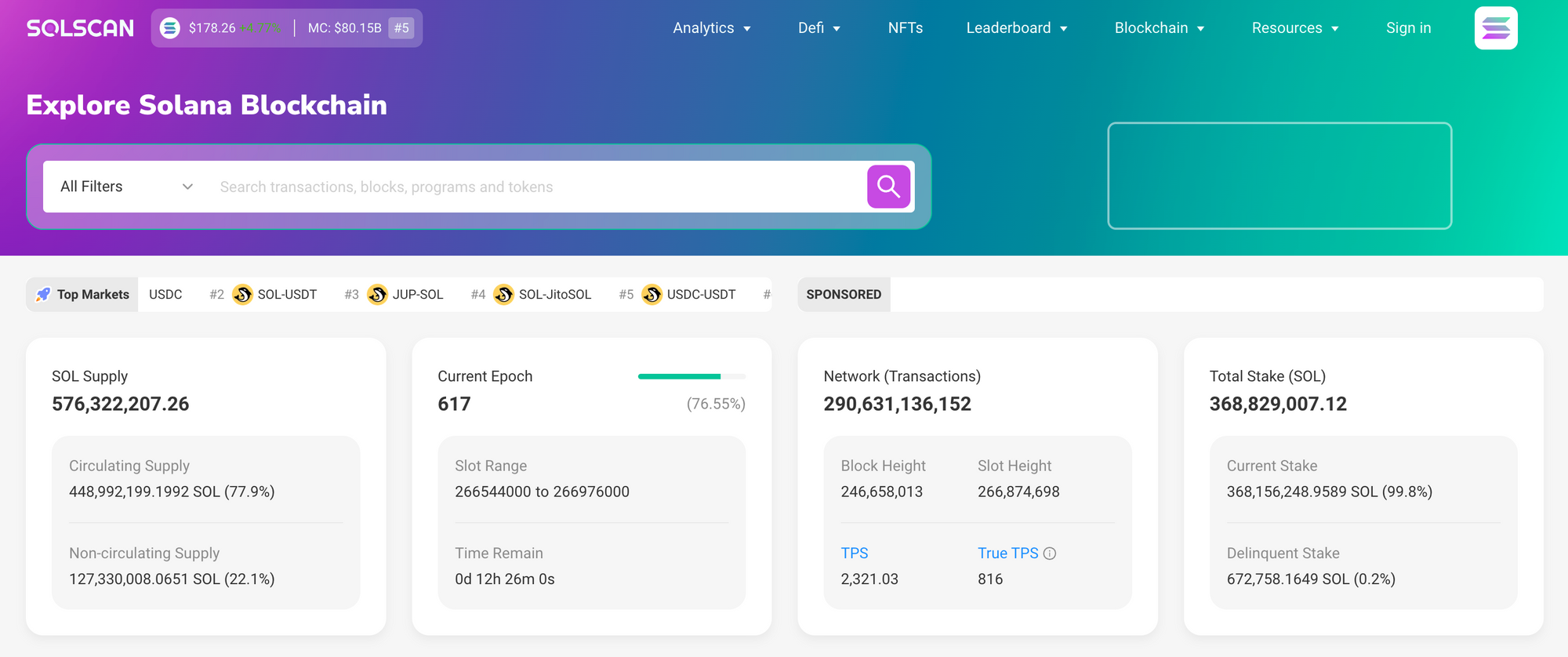
Why I Trust solscan explorer for quick verification
I use solscan explorer as my first stop when something smells like a suspicious token or when I’m tracking new mints after a Drop. Wow! The token tracker gives an immediate snapshot: circulating supply, holder distribution, and top transfers. Medium-latency on-chain events are visible fast, which matters when you’re watching for airdrop snapshots or suspicious wash-trading. On a deeper level, the ability to inspect program logs and decode instructions can turn a gut feeling into a data-backed hypothesis, so I rarely act on instinct alone—though sometimes I do, and that can sting.
Practical tip: if a token has few holders and a single whale wallet, be very cautious. Short sentence. Medium sentence explaining why: liquidity can be pulled, price can be manipulated, and market depth will be nonexistent. Long sentence: because many new Solana tokens are launched under programs that don’t enforce strong metadata or governance, the on-chain state may not represent what off-chain listings promise, which means you should verify mint addresses, associated program IDs, and token decimals before interacting, especially when money is on the line.
Something else bugs me about token pages sometimes. There are duplicates and lookalikes. Seriously? Absolutely. I’ve seen tokens with similar tickers and the same image but different mints. My method is simple: check the mint address, then confirm the token program and supply. If that passes, then look at holder distribution and recent transfers. If transfers spike from newly created wallets, red flag. Initially a single spike might look like activity, but then I noticed patterns where bots seed volume—very very important to notice that.
Let me walk through a small example from my notes. A friend DM’d a link to a “hot” token. I clicked the token on Solscan, skimmed holders, and saw one wallet with 95% of the supply. Hmm… My first reaction was to ignore it. Then I dug into the top transfers and saw repeated sends to exchanges and back, which suggested wash-trading. On one hand the project had a slick website—on the other hand the on-chain story was thin. So I marked it as high risk and moved on. Not glamorous, but safe.
Tools matter. Short list: token tracker, transfer ledger, program logs, associated accounts. Medium explanation: these let you verify provenance, watch liquidity, and decode instructions. Longer thought: when you combine that with external context—team disclosures, GitHub, and governance channels—you form a more complete picture, although off-chain claims can still mislead, which is why cross-validation is critical.
Here’s a quirk I appreciate. Solscan’s token pages offer quick export and CSV download. Nice. I use that to build simple spreadsheets when I’m tracking multiple launches. It helps me spot concentration risk and transfer timing across wallets. I’m often juggling ten tabs and a sticky note, so the ability to export is underrated. Also, by the way, if you dig into the metadata you’ll sometimes find legacy fields that tell you about burn events or weird supply adjustments… somethin’ I only noticed after night-long debugging sessions.
System 2 time—let me slow down and be explicit about limitations. Initially I thought on-chain transparency meant absolute truth. Actually, wait—let me rephrase that—on-chain data is truth about state and events, but interpretation is fallible. Addresses aren’t people, and labels aren’t guarantees. On-chain actions tell a story, but you must be careful with causation vs correlation. On one hand a large transfer could be a legitimate liquidity operation, though actually it might also be prelude to a rug. You need patterns, not single events.
Practical workflow I use when vetting a token: 1) Confirm mint address and decimals. 2) Inspect holder distribution and top wallets. 3) Review recent transfers and program logs. 4) Cross-check external info. Short and to the point. Medium detail: if any of these steps raise concern, stop and ask the team questions or wait for more on-chain history. Long thought: patience pays, because false positives will disappear and true red flags usually repeat, which is when you can act decisively rather than react emotionally.
Frequently Asked Questions
How does a token tracker help me avoid scams?
It surfaces supply concentration, transfer histories, and whether token mints match what a website claims. Short answer: it reduces guesswork. Longer answer: by analyzing holder distribution, unusual transfer patterns, and program interactions you can often detect manipulative behavior before you lose funds. I’m not 100% sure every scam can be caught, but many give on-chain clues.
Is Solscan the best explorer for Solana?
Best is subjective. Solscan is fast and feature-rich for token tracking. Really, it’s one of my top picks. It balances accessibility with deep inspection tools. For some workflows you might prefer other explorers or dev-focused RPC tools, though for everyday token vetting Solscan covers most bases.