Why Cross-Chain Swaps Fail Before They Look Expensive
A cross-chain swap can lose more value to a bad decision than to gas itself. That sounds counterintuitive in a market trained to obsess over fee estimates, but the larger risk is often structural: a transaction may involve a source-chain swap, a bridge message, a destination-chain action, changing exchange rates, and several independent failure points. The displayed dollar cost is only one part of the outcome. For US-based DeFi users, especially those moving assets across Ethereum, Arbitrum, Base, or other networks, the practical question is not simply “Which route is cheapest?” It is “Which route has the best probability of delivering the intended asset, at an acceptable total cost, with risks I can actually inspect?”
That distinction matters when using a browser wallet. A wallet is not merely a button that signs transactions. It is an interpretation layer between complex protocol calls and a human decision. Before you download and install a wallet extension, it is worth understanding what transaction simulation and gas optimization can—and cannot—tell you.
The first misconception: a cross-chain swap is one transaction
On a single network, a token swap commonly means calling an automated market maker or an aggregator contract. The contract checks balances, allowances, pool prices, slippage limits, and the requested recipient. A cross-chain swap is usually a sequence. On the source chain, the user may approve a token, exchange it, and deposit an asset or message into a bridge. A relayer, validator set, or interoperability system then helps transmit information. On the destination chain, another contract may release, mint, unwrap, or swap the resulting asset.
Those steps create an important mental model: cross-chain execution is a workflow, not a single atomic action. “Atomic” means that all parts succeed together or the whole transaction reverts. That guarantee generally ends at the source-chain boundary. If the source transaction succeeds but the destination action is delayed, rejected, or routed differently, the user may need to recover funds through a separate process. Simulation can inspect a proposed call, but it cannot make independent networks behave like one database.
This is why a low quoted fee can be misleading. The route may use inexpensive gas on the source network while exposing the user to bridge delays, liquidity differences, wrapped-asset confusion, or a destination-chain failure. Conversely, a more expensive route may use a better-established liquidity path and reduce operational complexity. Cost is a variable; settlement reliability is part of the product.
What transaction simulation actually does
Transaction simulation runs a proposed transaction against a representation of the current blockchain state without broadcasting it for final inclusion. In practical terms, it can reveal whether the call is likely to revert, which assets may leave the wallet, what tokens may arrive, how allowances change, and whether the requested contract interactions match the interface presented to the user.
That is valuable because many harmful or simply mistaken transactions are technically valid. A malicious contract does not need to make the transaction fail. It can succeed while transferring an unexpected token, granting an excessive allowance, or calling a function whose economic effect differs from the surrounding website language. A simulation-based review helps translate low-level contract behavior into a question a person can answer: “Is this the state change I intended?”
Simulation is not a crystal ball. It depends on the state used for the simulation, and that state can change before miners or validators include the transaction. Token prices may move, liquidity may be consumed, a nonce may become unavailable, or a bridge may alter its processing conditions. A simulation also cannot guarantee that an off-chain relayer will deliver a message, that a destination protocol will remain solvent, or that a token representing bridged value will retain the expected liquidity.
The strongest use of simulation is therefore not prediction in the absolute sense. It is error reduction. It can catch a wrong chain, a wrong recipient, an unexpected approval, a failed permit, insufficient balance, or a route whose quoted minimum output is already incompatible with current conditions. The result should be treated as a preflight check, not an insurance policy.
Gas optimization is a total-cost problem
Gas is the fee paid for computation and state changes on a blockchain. Users often try to minimize it by choosing a cheaper network or by adjusting the gas limit. These are different decisions. The gas limit is an execution ceiling; setting it too low can cause failure, while setting it higher does not necessarily mean the wallet will spend the entire amount. The gas price or fee settings determine how much the network is paid for included computation, subject to the chain’s fee market.
For cross-chain swaps, the more useful calculation is total expected cost:
Total cost = source-chain gas + bridge or relayer fee + destination-chain gas + price impact + slippage risk + failure or recovery cost.
Price impact is the movement caused by the trade’s own size relative to available liquidity. Slippage is the tolerance around the expected execution price. They are related but not identical. A route can show low gas and still be poor because its liquidity is shallow. Tightening slippage may protect the exchange rate, but it can also increase the chance of a revert during volatile conditions. Widening slippage may improve completion probability while accepting a worse fill. There is no universal “optimal” setting; the right choice depends on liquidity, volatility, trade size, and how costly a failed attempt would be.
Three broad routing strategies illustrate the trade-off. A direct bridge route may be simple and reduce the number of swaps, but it can depend heavily on the bridge’s security model and destination liquidity. An aggregator may compare several paths and improve execution, yet it introduces more contract calls and sometimes more complex approvals. A centralized exchange withdrawal can be operationally efficient for a user who already holds funds there, but it requires trust in the exchange, may impose withdrawal rules, and removes some of the composability that attracts users to DeFi in the first place.
For many users, the cheapest network is not the cheapest route. A failed transaction still consumes gas, and a successful transaction that produces an illiquid or unexpected representation of an asset may be more expensive in practice than a route with a higher visible fee. The sensible optimization target is value delivered with acceptable risk, not the smallest number in the fee field.
How to review a route before signing
Begin with chain identity. Confirm both the network you are leaving and the network you intend to use. Network names can look familiar while contract addresses, token representations, and liquidity conditions differ. Next, check the asset’s identity and destination form. “USDC” is a useful label, not a complete guarantee that two tokens are interchangeable across networks or protocols.
Then inspect the proposed state changes. An approval should name the token and spender. A swap should show the expected asset leaving and the minimum acceptable asset arriving. A bridge should make clear whether the destination asset is native, canonical, or wrapped. If the wallet displays a warning, treat it as an investigation prompt rather than an obstacle to click through. A warning can reflect a known contract issue, an unusual approval, an unverified interaction, or simply behavior that the wallet cannot confidently classify.
Before signing, compare the route’s expected output with the route’s worst acceptable output. Consider whether the destination transaction is automatic or requires another signature. Confirm that you have enough native gas on the destination chain for any follow-up action. This last point is easy to miss: receiving bridged tokens does not always mean you can immediately transfer or swap them if the destination wallet lacks that chain’s native fee asset.
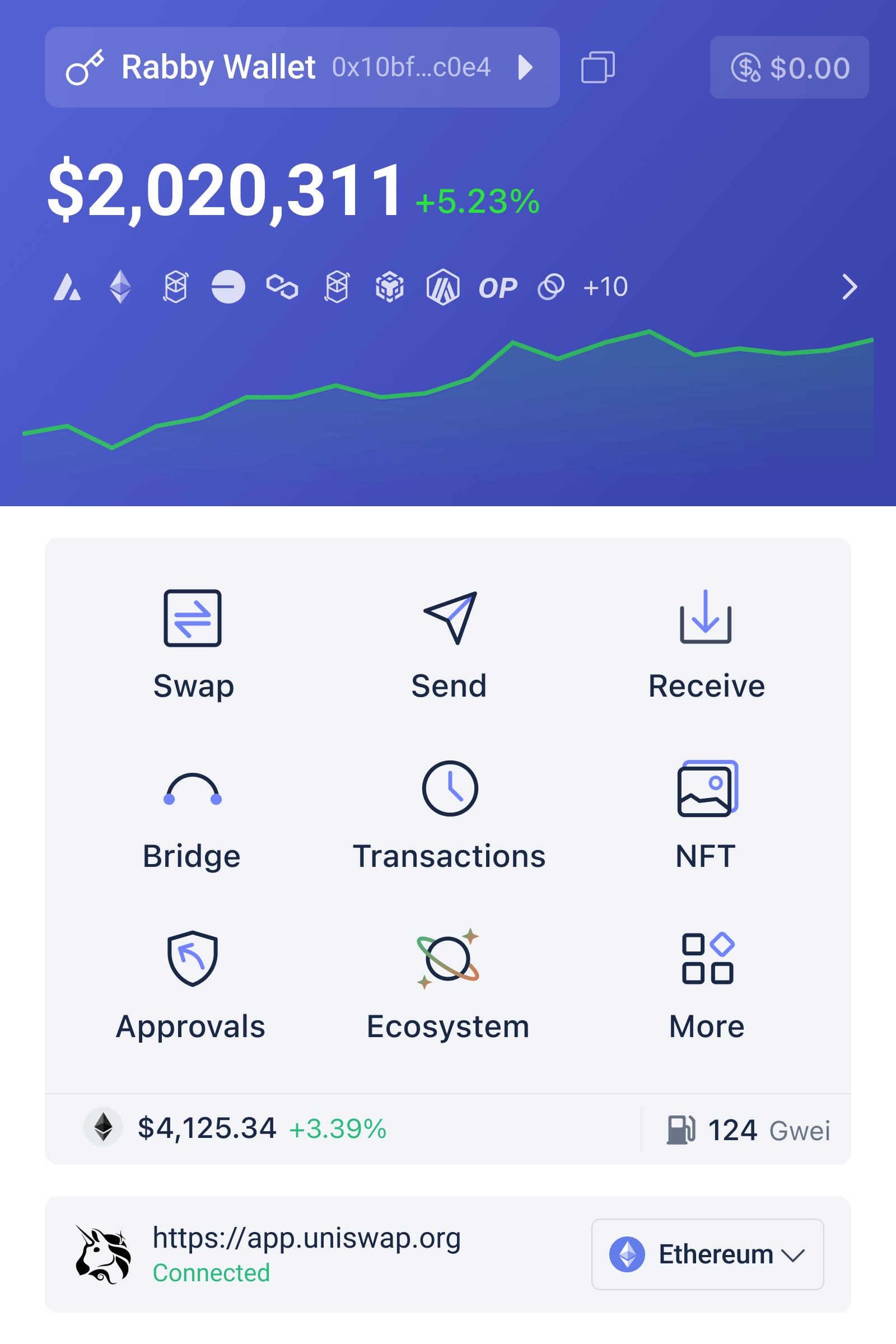
Users who want to install the wallet should obtain it through a source they can verify and then review the extension’s permissions, browser security, and backup practices. The rabby extension download can be a starting point for learning the installation path, but no wallet interface can replace checking the domain, protecting the seed phrase, and reading the transaction details before approval.
Where the model breaks
The most important limitation is that simulation is local while cross-chain settlement is distributed. A successful source-chain simulation says that a call is plausible under a particular state. It does not establish that a bridge’s validators, relayers, destination contracts, or liquidity providers will complete the entire economic process. This boundary is especially important during congestion, sharp market moves, protocol upgrades, or liquidity stress.
There is also a human-factors limit. More information does not automatically produce better decisions. Long calldata, multiple approvals, and technical warnings can overwhelm a user, encouraging blind confirmation. A useful wallet should compress complexity without hiding material consequences. The ideal interface gives a plain-language summary, but preserves a path to inspect contract addresses, token movements, fees, and warnings in detail.
There is no recent project-specific news to add for the current eligible week, so broader conclusions should remain conditional. If simulation tools become more accurate across multiple chains and wallets improve route explanations, users may be able to compare not only fees but also execution confidence and recovery paths. That would shift wallet design from transaction signing toward transaction risk management. The open question is how much uncertainty can be measured reliably when the final outcome depends on systems outside the wallet’s control.
FAQ
Does a successful simulation guarantee that my cross-chain swap will complete?
No. It indicates that the proposed call is likely to execute against the simulated state. It cannot guarantee future prices, block inclusion, bridge delivery, relayer behavior, destination liquidity, or the success of a later transaction on another chain.
Should I always choose the route with the lowest gas estimate?
No. Compare total cost and operational risk. A route with lower gas may have greater price impact, weaker liquidity, more complex approvals, or higher recovery costs if the destination step fails.
What is the most useful pre-signing check?
Verify the chain, token, recipient, spender, expected output, minimum output, and every approval or contract call. Then confirm that you will have enough native gas on the destination network for any action that is not completed automatically.
The practical lesson is simple but not simplistic: cross-chain swaps should be judged as settlement workflows. Simulation reduces preventable mistakes; gas optimization improves the economics; neither removes protocol, market, or bridge risk. A careful DeFi user does not ask only whether a transaction can execute. They ask what state will change, what assumptions make the route work, and what happens if one part of the workflow does not finish.